Diwaniya etiquette in Kuwait for the first time guest
The phrase diwaniya Kuwait etiquette guest captures a very specific moment for travelers, when a private invitation opens a door into Kuwaiti society. In the city of Kuwait, the diwaniya is a traditional reception room where men gather for conversations that move easily between family news, Kuwait business, and regional politics, and this living room institution shapes how Kuwaitis think about hospitality. For a luxury traveler staying in a premium hotel, understanding this protocol turns a polite visit into a meaningful exchange with Kuwaiti citizens. Most visitors base themselves in Kuwait City itself or in Salmiya, closest to the neighbourhoods where these evenings happen.
Locals describe the diwaniya as a traditional Kuwaiti gathering space for socializing and discussions, and this simple definition hides how central it is to the social architecture of the state of Kuwait. According to local reporting, there are around one thousand active diwaniyas across Kuwait, each welcoming on average twenty people per evening, which means that on any given day a significant share of the Kuwait population is either hosting or visiting one of these salons. For guests used to hotel lounges, the shift from polished lobby to a room where the host personally pours coffee and asks about your family can feel intimate, but it is exactly this intimacy that makes the experience so valuable. Wikipedia’s entry on diwaniya covers the wider context.
Most diwaniyas in the city Kuwait operate on an open door principle for male Kuwaitis, yet a foreign man usually enters through a specific invitation, often extended through business etiquette networks or a hotel concierge. Some gatherings are mixed or family focused, especially during religious holidays, and these may welcome women and children alongside men, but the host always sets the rules. As a visitor, you respect Kuwait customs by following the lead of the host, arriving on time, greeting people in the official language Arabic when possible, and remembering that you are stepping into a private space that carries both social weight and, in some cases, quiet influence with the Kuwaiti government.
How invitations work and how hotels quietly open doors
For many travelers, the biggest barrier to navigating diwaniya Kuwait etiquette guest expectations is not behavior but access, because you cannot simply walk into a private home in Kuwait City and ask to join. Invitations usually flow through relationships, whether a Kuwaiti business partner, a colleague who has married into a local family, or a hotel manager who understands that cultural activities matter as much as spa menus to discerning guests. In luxury properties that cater to Kuwait business travelers, senior concierges often know which hosts are comfortable welcoming international visitors and which evenings are better suited to a first time guest. Concierges in Sharq and Salmiya tend to have the widest local networks.
Some diwaniyas are explicitly political or focused on Kuwait business issues, while others are social, centered on football, art, or charitable activities that support vulnerable Kuwaitis. A traveler who is invited to a more formal business diwaniya should expect conversations about the state of Kuwait, regional dynamics with Saudi Arabia, and the latest decisions by the Kuwaiti government, all conducted with a seriousness that rewards attentive listening. Social diwaniyas, by contrast, may see men and sometimes Kuwaiti women moving in and out over three days of a religious holiday, with children darting between rooms and the host ensuring that water, Arabic coffee, and sweets never run out. For official opening times and dates, the official Kuwait tourism site is the reference.
Hotels have started to interpret this tradition within their own walls, creating diwaniya style lounges where guests can experience some customs traditions without intruding on private homes. Our in depth feature on how Kuwait’s living room culture shapes a luxury stay explains how certain properties design evening activities that echo the rhythm of a home diwaniya, from the way cushions are arranged to the order in which coffee and dates are served. These curated experiences are not a replacement for a real visit, but they can help a nervous guest understand seating patterns, greeting etiquette, and the unhurried sense of time that defines the tradition before stepping into a private diwaniya as a respectful visitor. Several of these lounges sit in Kuwait City’s waterfront properties along Arabian Gulf Street.
What to wear, where to sit, and how to speak with grace
Dress is the first visible signal that you understand diwaniya Kuwait etiquette guest expectations, and it is where many travelers overthink the rules. Kuwaiti men typically arrive in a dishdasha, the long white garment worn with leather sandals, while some Kuwaitis who work in international business may come straight from the office in Western clothes such as a suit and tie. As a foreign man, you will never be expected to wear a dishdasha, but you should choose modest Western clothes that cover shoulders and legs, avoid anything tight or transparent, and remember that the room may include elders for whom Kuwait customs around modesty are non negotiable.
For Kuwaiti women and foreign women, the picture is more nuanced, because many diwaniyas remain male only while others, especially family oriented gatherings, welcome women and children into adjacent spaces. When women attend, some Kuwaiti women choose an abaya and a veil that covers their hair, while others opt for elegant Western clothes that still respect Kuwait customs traditions of modesty, and foreign guests can follow this lead without feeling pressure to adopt a veil that covers more than they are comfortable with. The key is to avoid low necklines or short hemlines, carry a light scarf in case you wish to cover more, and trust that if adjustment is needed, a discreet family member will guide you rather than embarrass you.
Seating follows a quiet hierarchy, with elders and the main host near the entrance or coffee station, and younger men or late arriving guests taking places further away. You should never sit in the central chair unless invited, and you should greet the host first, then those nearby, using a simple “as-salamu alaykum” and, if you wish, a brief “inshallah”, which translates as “if Allah will allow it”. Conversation can range from the latest restaurant openings in the city of Kuwait to reflections on national day celebrations, but you should avoid criticizing religion, the prophet Muhammad, or the Kuwaiti government, and instead ask thoughtful questions about Kuwait customs, family life, and how diwaniya activities are changing as younger Kuwaitis balance tradition with global influences.
The rhythm of the evening: coffee, incense, and unhurried time
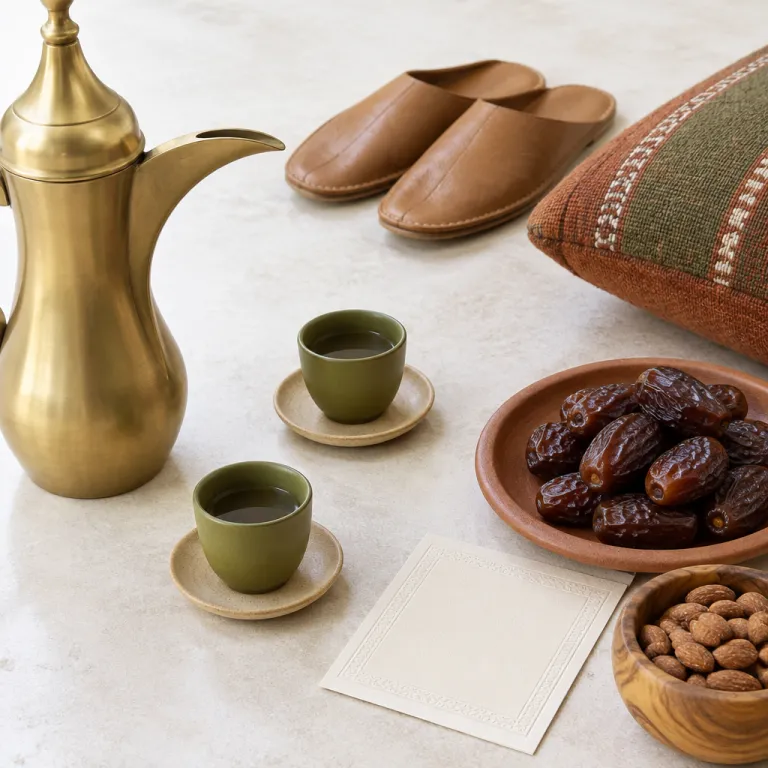
Once you have crossed the threshold, the choreography of diwaniya Kuwait etiquette guest experience follows a pattern that repeats across the state of Kuwait with small variations. You arrive, greet the host and nearby men, take a seat, and within moments a young man or sometimes one of the host’s children offers a tiny cup of Arabic coffee poured from a long spouted pot, always from right to left. The rule is simple yet meaningful, you accept at least one cup, gently shake the cup when you have finished to signal that you do not wish more, and you never place the cup on the floor, because in Kuwaiti society that gesture would feel careless.
After coffee, dates or small sweets appear, and conversations deepen, moving from polite questions about your hotel and your family to more layered discussions of Kuwait business, regional travel between Kuwait and Saudi Arabia, or how the Kuwait population is changing as more expatriates arrive. On some evenings, especially during religious holidays or around national day, the host may serve a full meal such as machboos, grilled meats, or seafood, and guests may drift in and out over three days of celebrations, with the diwaniya acting as an open house for Kuwaitis from different branches of the family. Throughout, water is constantly offered, and you should accept it regularly, both because of the dry climate and because in Kuwait customs, refusing water repeatedly can be read as a subtle rejection of hospitality.
Toward the end of the evening, someone may pass bakhoor, fragrant incense burned in a small brazier, and guests waft the smoke over their clothes, a sensory reminder that the diwaniya is as much about atmosphere as about talk. Departure is as important as arrival, you stand, thank the host directly, shake hands with those nearby, and avoid slipping out silently, because in Kuwaiti society acknowledgment of shared time matters. As one local explanation puts it, “What is a diwaniya? A traditional Kuwaiti gathering space for socializing and discussions”, and by the time you leave, that simple sentence will feel layered with the warmth of real human contact.
Where luxury hotels meet living room culture
For a traveler using a premium booking platform such as mykuwaitstay.com, the most interesting properties in Kuwait are not only those with polished suites but those that understand how diwaniya Kuwait etiquette guest expectations shape the wider hospitality landscape. In the city Kuwait, several high end hotels now design lobby lounges and executive floors that echo the layout of a traditional diwaniya, with low seating, generous spacing, and staff trained to move through the room with the same unobtrusive grace as a home host. This is not a design gimmick, it is a recognition that Kuwaiti society values spaces where conversation can unfold without rush, and that international guests who tune into this rhythm feel more anchored in the city. Sharq, Salmiya and Jabriya each place you in a different part of that social map.
Some properties go further, partnering with respected Kuwaiti citizens to organize cultural evenings where guests can learn about Kuwait customs traditions, the role of the diwaniya in shaping public opinion, and the way business etiquette in Kuwait often begins in these informal salons rather than in boardrooms. Articles such as our feature on Kuwait’s inward looking gastronomy show how the same impulse is reshaping the food scene, with chefs drawing on home recipes once reserved for family tables and diwaniya gatherings. For the solo explorer, choosing a hotel that curates such activities means you can move from a structured introduction in a semi public space to a more intimate invitation in a private home, always with a clear sense of how to behave as a thoughtful guest.
Over time, this blending of formal hospitality and private customs may subtly shift how diwaniyas operate, especially as younger Kuwaitis and Kuwaiti women who have studied abroad bring new expectations about gender, work, and public life back into the state of Kuwait. Yet the core remains stable, respect for elders, a belief that if Allah will allow it then relationships forged over coffee can shape both family fortunes and national debates, and a quiet pride in a tradition that has survived oil booms and political shifts. For travelers who approach with humility, patience, and a willingness to sit, sip water, and listen more than they speak, the diwaniya becomes not just an evening activity but the lens through which Kuwait, Kuwaitis, and their layered identities come into focus.
FAQ
What is a diwaniya in Kuwait and who usually attends ?
A diwaniya in Kuwait is a dedicated room or annex in a Kuwaiti home where people gather for structured yet informal conversations, usually in the evenings. Traditionally, male members of the community attend, although some diwaniyas are mixed or family oriented and welcome women and children in adjacent spaces. Attendance can range from a handful of close friends to around twenty people, and some well known hosts receive far more guests on busy nights.
How can a foreign guest receive an invitation to a diwaniya ?
Foreign guests rarely receive random invitations, because most diwaniyas are rooted in family networks, neighborhood ties, or Kuwait business relationships. The most common path is through a Kuwaiti colleague, a local friend, or a hotel concierge who knows hosts willing to welcome respectful visitors. When you express genuine interest in Kuwaiti society and show that you understand basic etiquette, people are often pleased to extend an invitation.
What should I wear to respect local customs in a diwaniya ?
Men should choose modest Western clothes such as long trousers and a collared shirt, avoiding shorts or sleeveless tops, while women should opt for outfits that cover shoulders and knees and are not tight or transparent. Kuwaiti men may wear the traditional dishdasha, and some Kuwaiti women may wear an abaya and a veil that covers their hair, but foreign guests are not expected to adopt local dress, only to respect Kuwait customs of modesty. Carrying a light scarf is useful for women who may wish to cover more in very traditional settings.
What is the usual sequence of events during a diwaniya evening ?
A typical evening follows a clear rhythm, arrival and greetings, seating according to seniority, the serving of Arabic coffee and dates, then extended conversations that may be followed by a light meal or full dinner. Water is offered throughout, and toward the end of the night bakhoor incense may be passed so guests can scent their clothes. Departure involves thanking the host directly and greeting those nearby rather than slipping out unnoticed.
Are diwaniyas held only on special occasions or throughout the year ?
Many diwaniyas operate throughout the year, with fixed evenings each week when the host receives guests, while others become especially active around religious holidays and national day celebrations. During these periods, some hosts keep their doors open for two or three days in a row, welcoming streams of Kuwaitis from different branches of the family and from their wider social and business circles. For a visitor, attending during such a period offers a particularly vivid glimpse into how Kuwaitis weave family, faith, and public life together.