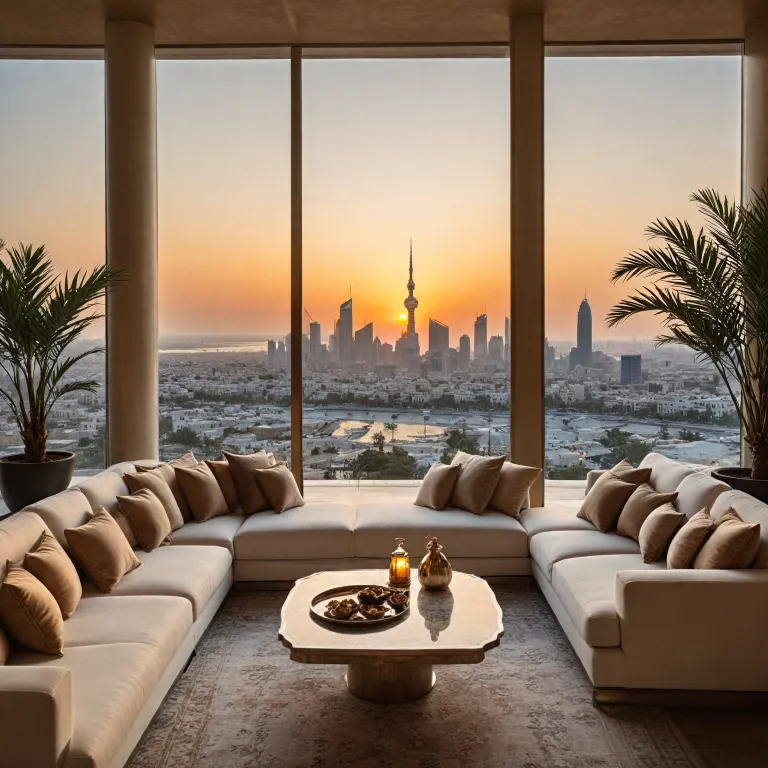
Luxury landscape of Kuwait City, Kuwait for discerning guests
Kuwait City, Kuwait stands on the Persian Gulf as a refined urban oasis. The capital city blends a deep Arab heritage with contemporary towers, malls, and waterfront promenades that appeal to luxury travelers. As the political and economic center of the country Kuwait, it concentrates five star hotels, embassies, and major corporate headquarters.
The modern skyline reflects the power of oil reserves and financial services that shaped the state into a regional hub in Asia. Within this dense city Kuwait, visitors encounter landmarks such as the Kuwait Towers, the National Assembly complex, and the seafront where the emir’s presence is symbolically felt. Kuwait population figures show a highly urbanized society, and the population Kuwait City welcomes includes both Kuwaitis and a large expatriate community.
This mix of Kuwait national identity and international influences creates a sophisticated hospitality scene. Many properties overlook the Persian Gulf, offering views that recall the country’s maritime trading past with Arabia, Iraq, and Iran Iraq routes. The government supports tourism as a complement to the oil economy, while Kuwait international investors help fund new developments. For travelers, this means a growing choice of premium rooms, suites, and serviced apartments.
Memories of the Gulf War and the later Iraq war still shape how people perceive the country Kuwait. Yet the city has rebuilt with resilience after Iraqi forces once occupied key districts during the war Kuwait. Today, guests find a safe, well regulated environment where the prime minister and wider government prioritize stability, and where the United States and Saudi Arabia remain important partners.
How luxury booking platforms elevate stays in Kuwait City
Choosing the right luxury hotel in Kuwait City, Kuwait begins long before arrival. Premium booking websites now curate properties across the city Kuwait, highlighting suites with sea views, executive lounges, and access to cultural districts. These platforms help Kuwaitis and international people compare locations, amenities, and services in a clear, guest centric way.
In a country Kuwait where the hospitality sector is closely linked to oil, finance, and government delegations, accuracy and transparency are essential. Reliable sites provide detailed room descriptions, high resolution photography, and clear policies that reflect Kuwait international standards. They also explain proximity to landmarks such as the Kuwait Towers, the National Assembly, and major business districts along the Persian Gulf coastline.
Many travelers arrive with limited knowledge of the middle east, or of how the Gulf region differs from nearby Saudi Arabia and Iraq. Quality booking platforms therefore contextualize Kuwait City within Asia, explaining local customs, dress codes, and expectations shaped by Arab culture. They may reference how the emir and the prime minister influence public life, while still focusing on practical details like check in times, spa facilities, and airport transfers.
Because Kuwait population density is high in the capital, location choices matter for both leisure and business guests. Some prefer waterfront properties facing the Persian Gulf, while others choose central city Kuwait addresses near ministries and corporate offices. By aggregating verified guest reviews from Kuwaitis and visitors alike, trustworthy sites help people evaluate service consistency, which is especially important in a state that rebuilt rapidly after the Gulf War and the Iraq war.
Understanding neighborhoods and views across Kuwait City’s shoreline
For travelers exploring Kuwait City, Kuwait, the choice of neighborhood shapes the entire stay. The coastal corniche offers sweeping views of the Persian Gulf, with several luxury hotels positioned to frame sunrise and sunset over the water. These areas suit guests who value quiet walks, sea breezes, and easy access to waterfront cafés popular with Kuwaitis and expatriates.
Closer to the Kuwait Towers and the historic core of the city Kuwait, properties emphasize proximity to cultural and governmental institutions. Here, visitors can reach the National Assembly, ministries of the state, and museums that narrate the Gulf War, the war Kuwait, and the impact of Iraqi forces on the country Kuwait. This district also highlights the role of oil reserves and trade in shaping the modern population Kuwait City hosts today.
Business travelers often prioritize central locations that reduce transfer times between meetings with government officials, Kuwait international companies, and regional partners from Saudi Arabia, Iraq, and wider Arabia. In these zones, hotels focus on executive floors, meeting rooms, and discreet service that respects the expectations of Arab and international delegations. The presence of the emir’s offices and the prime minister’s cabinet nearby reinforces the area’s political significance.
Further inland, residential districts reveal how Kuwait population growth has transformed the urban fabric of Asia’s northern Gulf. Here, smaller premium properties cater to Kuwaitis and long stay guests who value privacy and local restaurants over landmark views of the Persian Gulf. When using a booking website, filtering by neighborhood within city Kuwait helps people align their stay with personal priorities, whether cultural immersion, business efficiency, or coastal relaxation.
Key amenities that define premium stays in Kuwait City
Luxury hotels in Kuwait City, Kuwait compete through a refined mix of amenities tailored to regional expectations. Many properties feature expansive wellness floors with temperature controlled pools, hammams, and treatment rooms that respect Arab cultural norms around privacy and timing. Guests often find separate facilities for men and women, reflecting Kuwait national customs while still meeting international standards.
Dining is another defining element, as Kuwaitis and visitors from Saudi Arabia, Iraq, and across the middle east expect high quality cuisine. Signature restaurants frequently highlight Gulf seafood, Persian Gulf influences, and broader Arabia flavors, alongside international menus for people from the United States, Europe, and Asia. Some venues frame views of the Kuwait Towers or the city Kuwait skyline, turning a business dinner into a memorable experience.
For travelers seeking elevated privacy and space, suites and club floors provide dedicated check in areas, meeting rooms, and lounges. These zones are popular with government delegations, Kuwait international executives, and families from neighboring country Saudi Arabia who value discretion. Enhanced security protocols, shaped partly by the legacy of the Gulf War and the Iraq war, reassure guests that the state prioritizes safety.
Specialized amenities also reflect the country Kuwait economic profile, where oil reserves and financial services attract high net worth visitors. Chauffeur services, multilingual concierges, and curated city Kuwait tours help people navigate both modern malls and historic souqs. For travelers interested in private pool experiences and exclusive amenities, this detailed guide to luxury hotels with private pools in Kuwait offers practical inspiration and booking insights : luxury hotels with private pools in Kuwait.
Navigating cultural context, safety, and history when booking
Understanding context enriches any stay in Kuwait City, Kuwait, especially for first time visitors to the middle east. The country Kuwait is a constitutional monarchy where the emir holds significant authority, working alongside an elected National Assembly and a cabinet led by the prime minister. This structure shapes regulations that govern hotels, tourism, and the wider service sector across the city Kuwait.
Memorials and museums in Kuwait City recount the Gulf War, the war Kuwait, and the period when Iraqi forces occupied parts of the state. Exhibitions also reference the longer Iran Iraq conflict and the later Iraq war, explaining how these events affected the population Kuwait and the broader Persian Gulf region. When guests visit these sites, they gain insight into why security and diplomacy with Saudi Arabia, the United States, and other partners remain central to government policy.
Today, travelers generally experience a safe environment, supported by strict building codes and visible policing in key districts. Hotels coordinate closely with Kuwait international authorities to maintain standards that reassure both Kuwaitis and foreign people. Arabic is the official language; English is widely used in business.
Respecting local customs is essential in an Arab and Muslim majority society within Asia. Dress codes in public areas of Kuwait City are modest, and alcohol regulations differ from those in some neighboring parts of Arabia and the wider Gulf. By reading cultural guidance on booking platforms before arrival, guests can align their behavior with expectations in the country Kuwait and enjoy a more comfortable stay along the Persian Gulf.
Practical booking strategies for premium stays in Kuwait City
Effective planning helps travelers secure the best value and experience in Kuwait City, Kuwait. Start by clarifying priorities such as proximity to the Kuwait Towers, access to the Persian Gulf waterfront, or quick routes to ministries and corporate offices in city Kuwait. Then use filters on reputable booking websites to compare room types, cancellation policies, and loyalty benefits across multiple properties.
Because Kuwait population is highly urbanized, peak periods around national events, government sessions, and major conferences can tighten availability. Early reservations are advisable for people attending meetings with the emir’s representatives, the prime minister’s office, or the National Assembly. Travelers from Saudi Arabia, Iraq, the United States, and wider Asia often coordinate bookings with flight schedules through Kuwait international airport to minimize transfer times.
Reading verified reviews from Kuwaitis and international guests provides insight into service consistency, especially in a state shaped by rapid post Gulf War reconstruction. Look for comments that mention responsiveness to special requests, handling of security procedures, and knowledge of local attractions related to the war Kuwait and the Iraq war. These details reveal how well a property understands both Kuwait national history and modern expectations.
Finally, consider how each hotel’s location and services align with your purpose in the country Kuwait. Leisure travelers may prioritize spa facilities and sea views over the Persian Gulf, while business visitors focus on meeting spaces and connectivity across the middle east and Arabia. By combining cultural awareness, historical context, and careful comparison, guests can select a premium stay that reflects the sophistication of Kuwait City and the wider Gulf region.
Key statistics about Kuwait City and its urban profile
- The estimated population of Kuwait City and its metropolitan area stands at approximately 5,098,000 people, reflecting a fully urbanized society.
- The urbanization rate for the wider country Kuwait is reported at 100 %, underscoring the dominance of city Kuwait living over rural settlements.
- Economic activity in Kuwait City is heavily concentrated in oil and gas, financial services, and trade linked to the Persian Gulf and neighboring states such as Saudi Arabia and Iraq.
Essential questions for travelers considering Kuwait City, Kuwait
What is the main language spoken in Kuwait City ?
The main language spoken in Kuwait City is Arabic, which underpins government, education, and daily life across the country Kuwait. English is widely used in business, hospitality, and many premium hotels, making communication straightforward for people from the United States, Europe, Asia, and neighboring Gulf states. Travelers booking luxury properties in city Kuwait can generally expect bilingual staff and signage in both Arabic and English.
What is the climate like in Kuwait City ?
Kuwait City experiences a desert climate characterized by very hot summers and mild winters typical of the middle east. Temperatures can rise significantly during peak summer months, especially along the Persian Gulf coast where humidity adds to the heat. When booking hotels, guests may wish to prioritize properties with shaded pools, efficient air conditioning, and easy indoor access to malls and cultural venues.
What are the main industries in Kuwait City ?
The main industries in Kuwait City are oil and gas, financial services, and trade, which together drive much of the country Kuwait economic output. These sectors attract business travelers from Saudi Arabia, Iraq, the United States, and other parts of Asia, increasing demand for premium accommodation. Many luxury hotels therefore tailor services to corporate guests, government delegations, and investors linked to the energy and finance sectors across the Gulf.
References
- Encyclopaedia Britannica
- World Bank – Country data for Kuwait
- UN World Tourism Organization (UNWTO)