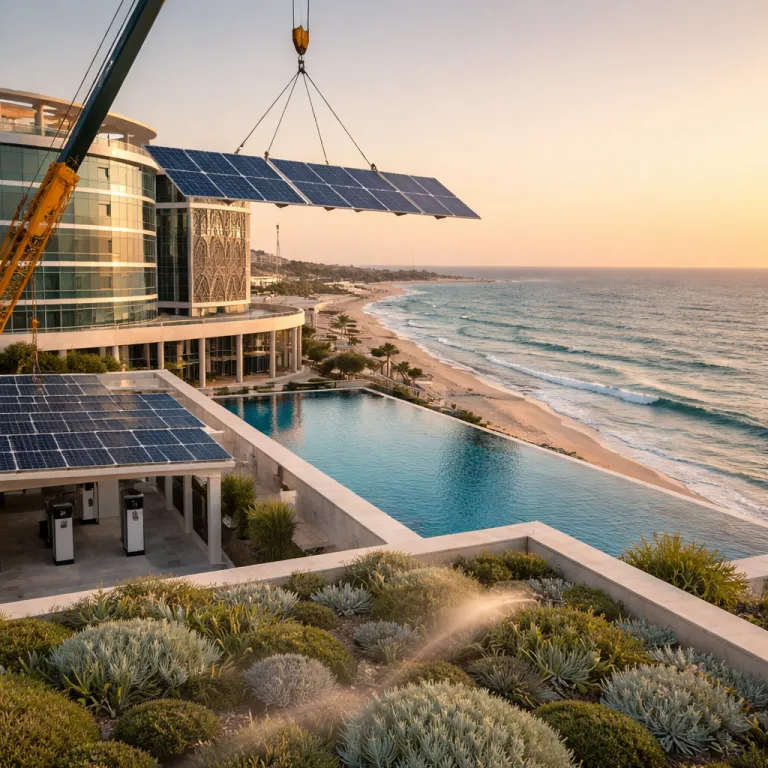
Why sustainable luxury in Kuwait starts with cooling, not slogans
In Kuwait, sustainable luxury lives or dies on cooling, not on marketing language. When temperatures in Kuwait City climb well above 40 °C for months at a time, the energy load of every hotel becomes the real test of sustainability, especially for properties that promise comfort to demanding guests. That is why any serious assessment of sustainable luxury hotels Kuwait must begin with how each hotel in the city manages shade, insulation, and air conditioning rather than how many plants sit in the lobby.
The national House 2035 prototype in Kuwait City quietly sets the benchmark for what responsible building should look like in this climate, because it combines renewable energy, smart systems, and water conservation to cut energy consumption by around thirty percent compared with a conventional villa of similar size, according to figures shared by the National Technology Enterprises Company and the Kuwait Institute for Scientific Research. Project managers at the National Technology Enterprises Company describe House 2035 as “a prototype eco-friendly house in Kuwait” and say it “demonstrates sustainable housing aligned with national goals,” and those two statements now hang over every new Kuwait hotel opening that claims sustainability. For travelers who care about sustainability, the question is simple yet demanding: does a hotel Kuwait property apply similar thinking to its façade, glazing, and cooling systems, or does it just talk about being eco friendly while running old chillers at full blast.
Business travelers extending a stay into leisure should look for very specific signals when they compare Kuwait hotels, because the gap between marketing and measurable sustainability can be wide. In central Kuwait City, a genuinely responsible city hotel will publish its energy intensity per occupied room in kWh, talk openly about retrofits such as chiller upgrades or improved insulation, and explain how it manages peak cooling loads during the hottest months. When you evaluate sustainable luxury hotels Kuwait, ask how the property balances thermal comfort, indoor air quality, and energy use before you even look at pools, spas, or other amenities.
The four sustainability dimensions that matter in Kuwait hospitality
Across Kuwait City, four sustainability dimensions separate serious properties from those that simply echo Vision 2035 language. Cooling comes first, because the environmental impact of air conditioning in a Kuwait hotel dwarfs most other variables, especially in glass heavy towers that ignore shading and orientation. The best sustainable practices in sustainable luxury hotels Kuwait therefore start with architecture that reduces heat gain, from deep overhangs to high performance glazing and intelligent building management systems that trim peak demand.
Water follows closely, because every pool, landscaped terrace, and spa in Kuwait City draws on a scarce resource that must be desalinated at significant energy cost. Responsible hotels in Kuwait now use sub metering, low flow fixtures, and grey water systems to cut potable water use, while still offering guests generous amenities such as plunge pools and hydrotherapy suites. When you read about eco friendly initiatives at any city hotel, look for specific water data, such as litres per guest night or percentage reductions per occupied room, rather than vague references to “awareness campaigns” or “green days”.
The third dimension is food sourcing, which is where Kuwait can learn selectively from Saudi Arabia’s Red Sea regenerative resorts that focus on local agriculture and low waste kitchens. In sustainable luxury hotels Kuwait, this translates into partnerships with Kuwaiti farms, seasonal menus, and careful handling of food waste rather than endless buffets that quietly send trays to landfill. The fourth dimension is cultural integration, where properties align with Vision 2035 by programming diwaniya style gatherings, Kuwaiti art, and Failaka Island excursions, as seen in the emerging eco friendly hospitality narrative around where Kuwait sustainable hospitality is heading.
Grading Kuwait’s leading luxury properties on real sustainable practices
Among sustainable luxury hotels Kuwait, a handful of properties in Kuwait City now show credible alignment with the Vision 2035 brief. The Hyatt Regency in Kuwait City, often referred to as the Hyatt Regency in the business district, has invested in efficient cooling systems, smart room controls, and careful water management for its pool and spa areas. In one recent retrofit phase, for example, a chiller replacement and control upgrade reportedly cut cooling energy use by roughly fifteen to twenty percent during peak summer months compared with the previous system, based on internal engineering data shared with corporate clients. For business travelers who value sustainability, this hotel offers a strong balance between high touch service and measurable environmental performance.
On the waterfront, the Regency Hotel in the Salmiya and Al Kout coastal area has become shorthand for seaside luxury, and the wider Regency and Al Kout zone stands out when it integrates shading, sea breezes, and efficient glazing to reduce cooling loads. Guests notice the calm, naturally lit public spaces, but the real story lies behind the scenes where building management systems track energy use and water consumption in real time and allow engineers to fine tune operations daily. This is where sustainability stops being a slogan and becomes a disciplined operational practice that shapes how amenities are run, how staff are trained, and how maintenance budgets are allocated.
In the heart of Kuwait City, the Waldorf Astoria at the Kuwait Burj complex and the adjacent Burj Alshaya development represent another tier of luxury that is slowly embracing sustainable practices. These properties have the scale and capital to retrofit systems, upgrade insulation, and refine their food sourcing strategies, which matters when hundreds of guests occupy rooms, suites, and meeting spaces. When you evaluate these hotels as a Kuwait hotel choice, ask directly about any environmental certification, published energy reduction targets in kWh per occupied room, and how they manage waste from large events and conferences, including whether food surplus is tracked or donated.
Where greenwashing creeps in : certifications, labels, and the Green Key test
Not every property that talks about sustainable luxury hotels Kuwait deserves to be on a responsible traveler’s shortlist. Some city hotel operators in Kuwait City focus on visible gestures such as towel reuse cards while ignoring the heavy lifting of cooling retrofits, water systems, and waste management. This is where third party certification, especially the Green Key programme, becomes a useful filter for travelers who want more than marketing language and prefer evidence based sustainability.
A hotel that holds a Green Key certification has undergone an external review of its environmental management, from energy and water to staff training and guest communication, against published criteria. In Kuwait, Green Key certified properties are still relatively few, which makes the label a meaningful differentiator rather than a generic badge, and travelers can verify current listings through the programme’s official directory. When you compare Kuwait hotels, ask whether the property is working toward Green Key or another recognized certification, and how that process is changing daily operations rather than just adding a logo to the website or brochure.
One example where skepticism is healthy is any Kuwait City property that promotes a large pool complex, extensive lawns, and all day buffets while offering little data on water use, food waste, or energy intensity. Such a Kuwait hotel may reference sustainability and even mention eco friendly initiatives, yet fail to address the core environmental challenges of this climate. For business travelers who care about impact, the key is to look past slogans and ask pointed questions about cooling systems, water sources, and whether the hotel’s sustainable practices are audited by an independent body such as Green Key or documented in a public sustainability report.
How to choose a sustainable stay in Kuwait as a business leisure traveler
For executives blending meetings with leisure, sustainable luxury hotels Kuwait should feel effortless rather than worthy. Start by mapping your Kuwait City schedule, then shortlist hotels in Kuwait that minimize transfers between the airport, business districts, and evening venues, because shorter journeys mean lower emissions and more time for rest. Properties such as the Hyatt Regency, the Waldorf Astoria at Kuwait Burj, and the Regency coastal hotels each serve different city hotel needs, from conference heavy trips to weekend breaks by the sea.
Next, look closely at how each hotel Kuwait option talks about sustainability on its website and in direct correspondence. Serious properties will share details about energy saving systems, water conservation, and waste handling, sometimes referencing national initiatives inspired by House 2035 and Vision 2035. If a hotel in Kuwait City mentions partnerships with local farms, cultural programming, or environmental education for staff, that usually signals a deeper commitment than simply asking guests to reuse towels or dim the lights.
Finally, remember that sustainability should enhance, not diminish, your experience as guests who value both comfort and conscience. Use a curated resource such as planning an elegant stay in Kuwait City to align your preferences with properties that match your standards for service, amenities, and environmental responsibility. When sustainable practices are embedded in design and operations, you enjoy cool, quiet rooms, thoughtful food, and attentive service while knowing that your choice supports Kuwait’s shift toward a more resilient hospitality landscape.
Swiss Belboutique and the rise of district level sustainability in Bneid Gar
The most interesting sustainability story in Kuwait right now may be unfolding not in the grand towers, but in Bneid Gar along the waterfront. Here, the Swiss Belboutique in Bneid Gar positions itself as a city hotel that blends contemporary design with a more measured environmental footprint, reflecting how sustainable luxury hotels Kuwait can evolve at a neighborhood scale. For travelers who prefer a smaller property in Bneid Gar Kuwait, this hotel offers a different rhythm from the mega complexes of the business districts.
At the Swiss Belboutique, sustainability begins with compact room layouts, efficient cooling, and careful selection of amenities that reduce waste without compromising comfort. Guests notice filtered water options, thoughtful lighting, and a pool area sized to the building rather than to a resort fantasy, which all contribute to a more eco friendly profile. When you evaluate this property against larger Kuwait hotels, the key question is how its operations, from laundry to food sourcing, align with the environmental expectations set by Vision 2035 and by increasingly informed guests.
Districts such as Bneid Gar also illustrate how Kuwait City can develop clusters of properties that share infrastructure, public transport links, and coastal promenades, reducing the need for constant car transfers. As more travelers seek sustainable luxury hotels Kuwait, areas like the Swiss Belboutique Bneid Gar corridor may become test beds for walkable, culturally rich stays that still deliver high service standards. For business travelers who extend their trip into leisure, choosing a Kuwait hotel in such a district can balance sustainability, convenience, and a more grounded sense of place than the enclosed world of a single mega development.
FAQ
How can I verify if a Kuwait luxury hotel is genuinely sustainable ?
Look for clear data on energy use, water consumption, and waste management rather than vague promises. Ask whether the Kuwait hotel holds a recognized environmental certification such as Green Key or is actively working toward one, and request links to any published reports or sustainability dashboards. Serious sustainable luxury hotels Kuwait will usually share details about building systems, staff training, and partnerships that support sustainability goals.
Do sustainable practices in Kuwait hotels affect comfort for business travelers ?
In well managed properties, sustainable practices usually improve comfort rather than reduce it. Efficient cooling, good insulation, and smart controls create quieter rooms with more stable temperatures, which benefit business travelers who need rest between meetings. Eco friendly measures such as filtered water stations and better air quality also enhance overall wellbeing during a stay.
Which sustainability aspects matter most when choosing a hotel in Kuwait City ?
Cooling efficiency is the most critical factor because of Kuwait’s extreme heat and the energy required for air conditioning. Water management, including how pools and landscaping are supplied, comes next, followed by food sourcing and waste handling with clear reduction targets in litres and kilograms per guest night. Cultural integration also matters, as properties aligned with Vision 2035 support local heritage and community engagement alongside environmental performance.
Are smaller properties in areas like Bneid Gar more sustainable than large towers ?
Smaller properties such as the Swiss Belboutique in Bneid Gar can sometimes manage their environmental impact more nimbly, especially when they use efficient layouts and right sized amenities. However, large towers like those in the Kuwait Burj and Burj Alshaya complexes may have more capital to invest in advanced systems and certifications. The key is to assess each Kuwait hotel on its actual sustainable practices and disclosed metrics rather than size alone.
Should sustainability be the deciding factor when booking a luxury hotel in Kuwait ?
Sustainability should be one of several key criteria, alongside location, service quality, and security, especially for business travelers. When two properties offer similar comfort and convenience, choosing the one with stronger sustainable practices supports Kuwait’s Vision 2035 goals and rewards operators that invest in better performance. Over time, consistent guest demand for sustainable luxury hotels Kuwait will encourage more properties to invest seriously in environmental performance.