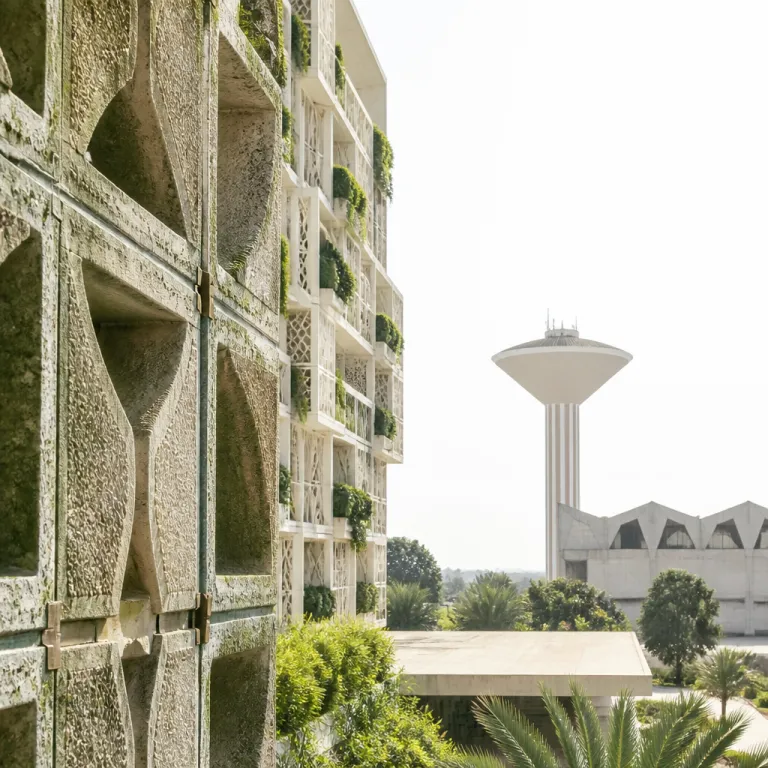
Why Kuwait’s modernist skyline belongs on your walking itinerary
Kuwait is often reduced to malls and desert drives, yet its mid-century skyline tells a richer story. For luxury travelers planning a stay in Kuwait City, a carefully paced modern architecture walk adds cultural depth that no shopping itinerary can match. Families basing themselves in a premium hotel near the center of Kuwait will find that these architectural walks turn the city into an open-air museum for children and adults alike.
The idea behind a Kuwait modernist architecture walking tour is simple: you move between hotel, mosque, museum and public buildings, tracing how a young state used concrete, glass and towers to express ambition. This is where Kuwait heritage becomes visible in structural form, from the National Assembly to the water towers that punctuate the skyline like sculptural beacons. For visitors who usually rely on a private tour guide, walking at street level offers a slower rhythm, giving time to notice façades, shaded arcades and the way traditional Kuwaiti motifs soften stark modern lines.
Staying in a luxury property in the center Kuwait area means you can start your walking tour directly from the lobby, without long transfers. Many five-star hotels sit within a short drive of Kuwait Towers, the Grand Mosque and the National Museum, making it easy to weave architecture into a family-friendly day. For travelers comparing premium hotels on a Kuwait modernist architecture themed trip, proximity to Kuwait City’s historical core and the Arabian Gulf corniche will matter as much as spa menus or kids’ clubs.
Kuwait Towers, the grand mosque and the national assembly: an essential modernist axis
The Kuwait Towers remain the most photogenic starting point for any Kuwait modernist architecture walking tour, even for travelers who have seen countless skyline shots. Their sculpted spheres, designed as part of a wider water supply system, combine infrastructure and sculpture in a way that still feels daring when you stand beneath the towers at the edge of the Arabian Gulf. From many luxury rooms in Kuwait City, visitors will wake to a direct view of these towers, turning the first coffee of the day into a private preview of the walking route ahead.
From Kuwait Towers, follow the seafront towards the Grand Mosque, often called Masjid Kabir or the mosque Kuwait City residents reference when giving directions. Here, Islamic architecture meets state scale: the grand prayer hall, courtyards and colonnades show how traditional Kuwaiti craftsmanship was folded into a modern civic complex. Non-Muslim visitors are usually welcomed on guided tours outside prayer times; families should time their visit so older children can join an English-language tour with a knowledgeable tour guide, gaining context on Kuwait history, religious culture and the etiquette that shapes daily life.
A short walk inland of around ten minutes (roughly 800 meters) brings you to the National Assembly, a key stop on any Kuwait modernist architecture walking tour that takes design seriously. The parliament building’s sweeping concrete roof, designed by Danish architect Jørn Utzon in the early 1970s and inaugurated in 1985 (as documented in the archives of the Utzon Center in Aalborg), links Kuwait heritage with the same architectural imagination that produced the Sydney Opera House. For travelers who want a deeper urban adventure beyond hotel pools, this axis of Kuwait Towers, Grand Mosque and National Assembly forms a powerful introduction to Kuwait City as a place where political, cultural and spiritual life share the same waterfront stage, and where a good Kuwait-based guide can unlock stories that standard tours miss.
For curated ideas on pairing these landmarks with high-comfort stays, see our insider guide to urban adventures for discerning travelers in Kuwait, which aligns architecture-rich routes with luxury and premium hotel booking choices.
Water towers, Kuwait National Museum and Sadu House: mid century icons for curious families
Beyond the famous Kuwait Towers, a network of thirty-one water towers designed by Swedish architect Sune Lindström in the early 1960s turns the wider city into an open-air gallery. These concrete towers, engineered with the firm VBB to modernize Kuwait’s water supply (a story documented in regional planning reports from the 1960s), rise above parks and residential districts, each cluster offering a slightly different sculptural language. For families staying in premium hotels in Salmiya or the center Kuwait corridor, a Kuwait modernist architecture walking tour that links these towers with nearby playgrounds and cafés becomes an easy half-day outing.
The official purpose of these structures remains practical: “What is the purpose of Kuwait's water towers? To store and distribute water efficiently.” Yet their presence has shaped Kuwait heritage in unexpected ways, becoming landmarks that older Kuwait City residents associate with childhood, first apartments and the rapid growth of the city. When you walk between towers, your tour guide can explain how reinforced concrete construction and modernist design methods allowed Kuwait to build infrastructure that doubled as cultural symbols, a theme that runs through many mid-century projects.
Close to the Kuwait National Museum, which anchors the Kuwait national story with archaeological finds and social history exhibits, you can fold more explicitly cultural stops into your walking tour. Sadu House, a restored complex dedicated to traditional Kuwaiti weaving, sits nearby and offers a quiet counterpoint to the bold lines of the museum and surrounding ministries. This cluster lets visitors move in minutes from galleries to courtyards, from air-conditioned halls to shaded verandas, making it ideal for families who want culture without exhausting children, and for travelers who value hotels that sit within a short drive of both museum and mosque Kuwait landmarks.
From souq Mubarakiya to Seif Palace: a practical modernist walking route
Any Kuwait modernist architecture walking tour aimed at luxury travelers should respect both climate and comfort, which means planning distances carefully. A realistic route for most visitors starts in the morning at souq Mubarakiya, the traditional market that predates many modernist projects yet now sits framed by concrete ministries and shaded arcades. From here, a ten- to fifteen-minute walking time (about one kilometer) brings you past low-rise commercial blocks towards Seif Palace, where historical elements and newer wings show how Kuwait heritage and state power share the same place.
From Seif Palace, continue towards the Grand Mosque and the nearby Masjid Kabir complex, then on to the National Assembly and the Kuwait Towers along the waterfront. This sequence keeps the Arabian Gulf breeze at your side and allows a tour guide to adjust the pace for families, pausing in parks or hotel cafés when the sun peaks. Many premium properties along this axis understand that visitors now seek more than malls, so concierge teams will arrange private tours, provide a specialist guide Kuwait based architect, or suggest shaded shortcuts between cultural sites.
For travelers staying longer, extend the walking tour concept into a series of shorter tours over several days, using taxis to bridge hotter stretches between Kuwait City and districts such as Salmiya or the planned Heritage Village revival area. The approved Heritage Village project, announced in the early 2020s with a hotel, shops and villas inspired by traditional Kuwaiti architecture, will eventually create a new center Kuwait style hub where modernist ministries, restored houses and contemporary hospitality sit side by side. When that opens, families will be able to step from their luxury suite directly into lanes that echo Kuwait oldest neighborhoods, turning every stroll into a lesson in history, culture and evolving urban life.
To match these routes with properties that keep you cool between walks, our feature on Kuwait hotels that make extreme heat irrelevant highlights stays where shaded pools, efficient transport and thoughtful service support architecture-focused days.
Al Ahmadi, desert geoparks and why architecture matters for luxury stays
While Kuwait City concentrates many modernist landmarks, the wider country offers extensions that reward travelers willing to leave the hotel district. Al Ahmadi, the planned oil company town south of the capital, is now the subject of a UNESCO-backed documentation project that treats its cinema, souq and grid of villas as part of Kuwait heritage (a focus noted in UNESCO reports on modern Gulf company towns). A private Kuwait modernist architecture walking tour here, arranged through a specialist tour guide, will reveal how corporate planning, traditional Kuwaiti social life and mid-century design collided in a single place.
North of Kuwait City, the emerging Kuwait Geopark concept links desert landscapes with archaeological sites, adding geological drama to an itinerary that already includes towers, mosque complexes and museum visits. Families can pair a morning among rock formations with an afternoon back in the center Kuwait area, where the Kuwait National Museum and Sadu House provide cultural context for the country’s relationship with land and sea. For luxury travelers, the ability to move from a high-comfort hotel suite to a guided walk among ruins or water towers within a single day is part of Kuwait’s quiet appeal.
Looking further ahead, the five-island transformation plan for Boubyan, Warba, Failaka, Miskan and Aou signals that future tours will likely include new cultural districts, resorts and heritage sites along the Arabian Gulf. As these projects mature, a Kuwait modernist architecture walking tour will sit alongside island-based stays, desert excursions and city center mosque visits, giving visitors a layered sense of Kuwait national identity. For families choosing premium hotels now, it makes sense to select properties that already engage with culture, whether through partnerships with museum curators, architecture-focused concierge services or collaborations with guide Kuwait experts who can interpret both historical and contemporary projects.
Design led hotel choices for families following Kuwait’s modernist trail
For a Kuwait modernist architecture walking tour to feel effortless, your hotel choice matters as much as your map. Properties along the Kuwait City corniche and in the central business district place visitors within a short drive of Kuwait Towers, the Grand Mosque, the National Assembly and the Kuwait National Museum, reducing transfer time and keeping children fresh for cultural stops. When evaluating luxury and premium hotels, look for design cues that reference Kuwait heritage, from traditional Kuwaiti patterns in textiles to art collections that feature water towers, mosque Kuwait silhouettes or historical photographs of souq Mubarakiya.
Some high-end hotels now offer in-house cultural concierges who act as an informal tour guide, curating walking tour routes that link museum visits with café stops and shaded playgrounds. Ask whether the concierge team can arrange private tours of Sadu House, behind-the-scenes experiences at the National Museum or guided visits to Masjid Kabir, ensuring respectful access to Islamic architecture for non-Muslim guests. Families should also check whether properties provide early check-in or late check-out, allowing flexible time windows for morning and evening walks when the city is cooler and the Arabian Gulf light softens the concrete façades.
For repeat visitors, consider alternating stays between a central hotel and a resort-style property further along the coast, using the first base for intensive Kuwait modernist architecture walking tour days and the second for slower tours focused on seafront promenades and emerging cultural centers. As Kuwait oldest districts undergo sensitive regeneration, including the Heritage Village revival, new hotels will likely integrate courtyards, wind towers and other traditional Kuwaiti elements into contemporary layouts. Choosing these properties sends a clear signal that visitors value culture, history and architecture as much as spa menus, encouraging the hospitality sector to keep investing in experiences that bring Kuwait City’s modernist story to life.
FAQ: Kuwait’s modernist architecture and walking tours
Is Kuwait suitable for a family friendly modernist architecture walking tour ?
Kuwait is well suited to a family friendly Kuwait modernist architecture walking tour, provided you plan around the heat and choose a central hotel. Distances between key sites in Kuwait City, such as Kuwait Towers, the Grand Mosque, the National Assembly and the Kuwait National Museum, are short enough to combine with taxi hops and café breaks. Many cultural sites welcome children, and a good tour guide can adapt explanations of history, culture and Islamic architecture to different ages. Dress modestly for mosque visits, covering shoulders and knees, and be prepared to remove shoes before entering prayer halls.
How long should I allow for a modernist walking route in Kuwait City ?
Most visitors should allow half a day for a core Kuwait modernist architecture walking tour that links souq Mubarakiya, Seif Palace, the Grand Mosque, the National Assembly and Kuwait Towers. This gives enough time for mosque Kuwait visits, photo stops and a relaxed break along the Arabian Gulf corniche without rushing. If you want to add the Kuwait National Museum, Sadu House or additional water towers, plan a second half day rather than compressing everything into one long route, especially in hotter months.
Do I need a specialist architecture tour guide in Kuwait ?
You can walk between many landmarks in Kuwait City independently, but a specialist architecture tour guide or a well-briefed guide Kuwait based expert will add significant value. They can explain how Sune Lindström’s water towers fit into the wider story of Kuwait heritage, why the National Assembly roof matters in global design history and how traditional Kuwaiti motifs appear in modern ministries. For luxury travelers, private tours also allow flexible timing, hotel pickups and tailored stops that match your family’s interests.
Which areas beyond Kuwait City are interesting for architecture focused visitors ?
Beyond the center Kuwait area, Al Ahmadi offers a rare look at a planned oil company town with mid-century villas, a cinema and a structured grid that differs from Kuwait City’s organic growth. The emerging Kuwait Geopark north of the capital combines desert landscapes with archaeological sites, adding a geological layer to an architecture-heavy itinerary. In the longer term, the redevelopment of islands such as Failaka and the Heritage Village revival in Kuwait City will create new cultural and architectural destinations along the Arabian Gulf.
How can I combine luxury hotel stays with cultural and architectural experiences ?
Start by choosing a hotel in Kuwait City that sits within easy reach of Kuwait Towers, the Grand Mosque and the Kuwait National Museum, then ask the concierge to map a Kuwait modernist architecture walking tour tailored to your family. Many premium properties can arrange private tours of Sadu House, mosque visits with clear guidance on etiquette and transfers to Al Ahmadi or other heritage sites. By prioritizing hotels that engage with culture and history, you turn the city into an extension of the lobby, with every walk between towers, museums and souqs becoming part of a coherent, design-led stay.